
Resource Guarding
How to Prevent Resource Guarding in Dogs
Understand why dogs guard food, toys, or spaces, and prevent conflict and create a safer, calmer environment.
Resource guarding is a common behavior in dogs, where they protect food, toys, beds, or even people from being taken away. While it can feel alarming or even scary, resource guarding is a normal instinct for many dogs — but one that needs to be addressed to keep everyone safe and comfortable.
With understanding, patience, and positive training, you can help your dog feel more secure and reduce the need to guard prized possessions.
This article will explain why resource guarding happens and share effective, gentle strategies to manage and resolve it.
WHAT IS RESOURCE GUARDING?
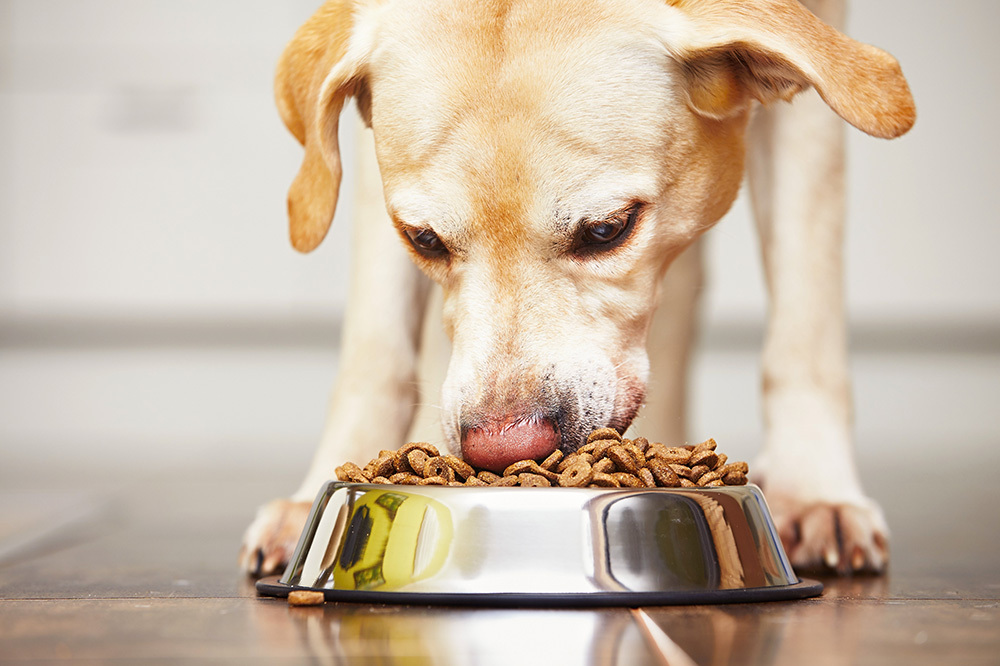
Some dogs “guard” the resources that are important to them. These “resources” can be anything from food & treats to toys, beds, or even people and other pets.
Dogs may exhibit resource guarding behaviors when they feel that their resource is under threat by another pet or person, or that the resource may be taken away from them.
This may look like growling, baring teeth, lunging, or even attempting to bite when someone approaches or reaches for that resource.
WHAT CAN I DO ABOUT IT?
Resource guarding can be seen in dogs of any breed and age. Early training can help prevent resource guarding from developing, but if your pet is already exhibiting these behaviors, there are training steps you can take to minimize or eliminate it!
This comprehensive guide can help you work with your pet to reduce these unwanted behaviors and keep your whole household safe and harmonious.
What to Do First:
Start by making a list of the items your dog guards. Does he guard certain toys or all toys? Is it all of his food or just his favorite high-value treats? Does he guard from everyone or just certain people/pets?
Make a note of any patterns to his guarding. Understanding his guarding patterns is the first step to correcting it. This will help you to focus your efforts and identify instances of guarding before they happen.
Preventative Measures
Of course, training may take some time to have the desired effect. In the meantime, you can take steps to remove any opportunities for your dog to guard his resources from you or other pets. This will reduce the unwanted behaviors while you continue training.
For example, if your dog guards his food, start by feeding him separately (i.e., in another room, by himself, with a closed door) for each meal. Be sure to never reach for his food while he’s still eating — wait until he’s finished and moved on so you can safely pick up his bowl.
If he guards his toys, keep toys up and out of his reach until it’s time to play. Then, supervise any toy time to ensure children and other pets don’t approach him while he’s playing. Never try to grab a toy from him during play time. Instead, divert his attention with the offer of something he loves even more —maybe a favorite treat or a walk — so that he voluntarily leaves his toy behind where it can be safely picked up.
The Resource Hierarchy
Remember that list you made of the resources your dog tends to guard? Here’s where we will rank these items in a hierarchy of “most valued” to “least valued”.
Training will begin with his least valued items, and as you have success, you can begin working up the hierarchy and work with his most highly-cherished, prized items.
For the time being, do not give your dog any access to items at the top of the hierarchy.
Knowing These Will Help
Training against resource guarding will be easier if your dog already knows some basic commands: Sit, Stay, Down, Wait, and/or Leave It
If you haven’t already, you’ll also want to train your dog to leave an area by verbal or hand signal commands alone (as opposed to manual handling such as grabbing his collar). This is called “cooperative compliance”.
Once trained, your dog will learn that something he loves is waiting for him whenever he’s instructed to leave an area, and he will happily oblige. This will help immensely as you begin training him to leave his resources behind!
Dogs that run off and guard objects should not be chased or challenged when they possess objects. If this happens, entice them away by offering something they’ll voluntarily leave their item for. If he isn’t willing to trade his object for a treat, try enticing him away by ringing a doorbell, jingling some keys, or another stimulus that generally gets their attention.
BEHAVIOR MODIFICATION
The following training process is a type of behavior modification (aka B-Mod). B-Mod uses training techniques to change the way your dog reacts to something (in this case, someone approaching/ taking his favorite resources). This training process is systematic and happens in steps. Patience and consistency are the keys for success!
The training process will follow a simple structure, beginning with neutral objects (such as a rock) and slowly increasing in object value (and therefore difficulty) over time.
Our goal is two-fold:
First, to decrease the dog’s anxiety surrounding his most-guarded objects, teaching him to relax and be less anxious when presented with the object.
Second, to minimize the danger to any person who may come into contact with the dog when he is protecting his object. When dogs learn to behave appropriately, they become safer.
If possible, we recommend practicing the following steps with a professional trainer:
Step 1:
Start with an object of absolutely no interest to the dog, such as a paperweight or a rock from outdoors.
Ask him to sit and stay (or lie down and stay). Then place the neutral item 2 to 3 feet from him, right where he can see it. Be sure to offer some verbal praise and encouragement for staying relaxed and holding his “stay”!
Once he is relaxed and in a solid “stay”, pick up the object, hold it for a moment, and return it to the spot in front of him.
If he stayed relaxed and allowed you to remove the object in front of him, he’s done it! This is the important behavior we want to mark with a reward. Offer him a timely reward, such as a treat, along with some happy, verbal praise!
Repeat this several times until he has a handle on it.
Step 2:
Now, we will repeat the steps above with a higher value object — something from the very bottom of his hierarchy. This time, he should be tethered. It’s important that we can practice this safely. Leash him up and attach the leash to something secure. Be sure he is not able to reach you, even if he pulls.
Start at a good distance — about 10 feet away. Place his low-hierarchy object on the ground 10 feet from him where he can see it. Repeat the steps above. Reward him (treat + praise) any time he stays relaxed as you retrieve and replace his object.
Once he’s able to repeat this successfully several times, you may slowly move to incrementally closer distances. Start by moving a foot closer so you are 9 feet away and repeat the training several more times. Then move to 8 feet away, then 7, 6, and so forth.
Step 3:
The closer you get to him, the more difficult he may find it to stay relaxed. As you get closer during practice, you will eventually be within a few feet of him. Here, we want to take the pace even slower.
Once you are about 3 feet away, start closing the distance at even smaller increments — perhaps 6 inches at a time rather than a foot.
Don’t rush! We don’t want to get too close and push him too quickly. Wait until he is repeatedly successful at each distance before moving slightly closer.
Once he is successfully relaxed at a foot to 6 inches away, you may place the object right at his feet. Keep a close eye out for any warning signs of guarding behavior (such as low growling or baring teeth). If you see these signs, back up and start again at a greater distance where he is more comfortable.
Step 4:
If you’re at this step, you have successfully taught your dog to be relaxed, even when you are handling his object right in front of him. This is a great sign!
Now, it’s important to continue practicing. Practice the steps above in any locations and variations you can! Different rooms in the house, outside, and with every member of your household.
You may now begin repeating these steps with objects higher on his Hierarchy. Again, patience is key. And don’t forget to keep up the praise when he gets it right!
As you continue, you may begin repeating this practice but offering treat rewards at lower and lower increments. But keep up the verbal praise!
The more you practice this over time, the more success you will have in correcting his guarding.
Some material adapted from original article by Karen Overall (2008)
NEED MORE HELP?
Contact our Pet Helpline using the button below—or call (919) 772-2326 opt 5. We're here to help!